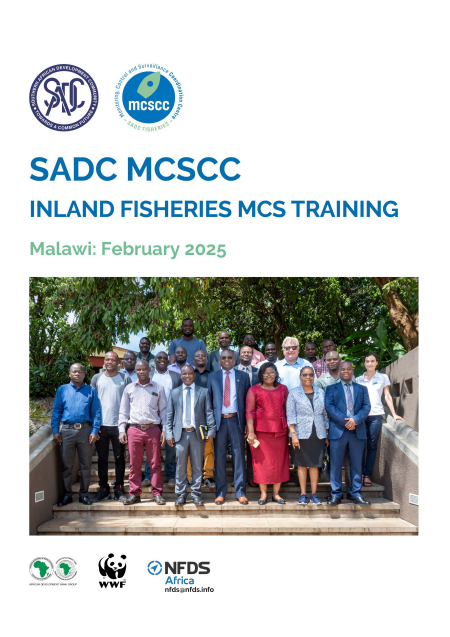
RECORD OF THE FIRST INLAND FISHERIES MCS TRAINING, (17-21 February 2025)
First Inland Fisheries MCS Training, 17-21 February 2025, Lilongwe (Malawi)
Inland fisheries bring multiple benefits to over one million people in the Southern African Development Community (SADC) region, and they account for at least 40 percent of the region’s total fisheries catch. Inland fisheries provide a critical source of nutrition for local populations, especially for communities living in remote areas as well as providing formal employment in the inland commercial fisheries. Most of the fish is either eaten in the country where it is caught or exported to neighbouring countries, therefore contributing to regional trade and enhanced SADC’s self-sufficiency. While, the trade of fish and fish products, along with other activities such as fish processing, all generate jobs nationally and regionally.
With the recent entry into force of the SADC Fisheries Monitoring Control and Surveillance Coordination Centre (MCSCC), in Maputo, Mozambique, the SADC countries are now coordinating their approach through sharing lessons, pooling information, collaborating on trainings, harmonising procedures, and exploring new technologies to help find innovative and appropriate solutions to improve fisheries MCS. This is particularly important as over 70% of the region’s freshwater resources are shared between more than one country, including twelve major transboundary river basins.
The first training on MCS for inland fisheries was organised through the MCSCC in Lilongwe, Malawi, in February 2025. This training was organised with the objective to integrate further inland fisheries countries into regional cooperation through the MCSCC. The Charter for Establishing MCSCC states that the MCSCC “shall govern cooperation of Member States in the area of sustainable fisheries management, particularly in MCS activities in the marine and inland waters of the SADC region” (MCSCC Charter, Article 3). However, so far, more focus has been set on marine fisheries. This training was therefore organised with the objective to provide inland fisheries State Parties with MCS tools tailored to the context of inland fisheries, to sensitise them on the MCSCC, and to understand their needs, interests and expectations towards the MCSCC. It was expected that this training would help improve the ability and capacity of MCS officials in inland fisheries State Parties to engage in the work of the MCSCC.
The meeting was conducted by NFDS, in coordination with WWF and PROFISHBLUE in consultation with the represented State Parties – Democratic Republic of Congo (DRC), Malawi, Mozambique, United Republic of Tanzania (Tanzania), Zambia and Zimbabwe – as well as the Interim Project Management Unit (IPMU) of the MCSCC. Focus for practical exercises implementing the provided MCS tools was set on major shared waterbodies, including Kariba, Cahora Bassa, Malawi/Niassa/Nyasa and Lake Tanganyika.