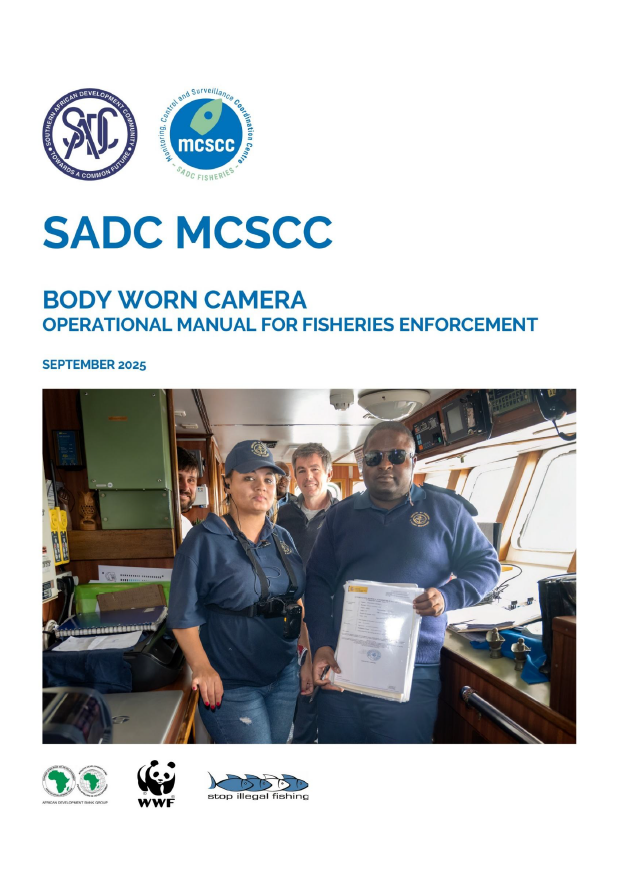
Body worn camera – operational manual for fisheries enforcement
Body worn camera – operational manual for fisheries enforcement
This manual was developed by the Monitoring, Control and Surveillance Coordination Centre (MCSCC) of the Southern African Development Community (SADC) as a monitoring, control and surveillance (MCS) tool to support enhanced fisheries MCS capability at national and regional level.
It applies to both marine and inland fisheries contexts, improving capacity building, transparency, accountability, and evidence collection during inspections of large and small vessels, landing sites, fish markets, and other points along the value chain.
The manual provides operational guidance for the safe, lawful, and effective use of Body-Worn Cameras (BWC) by fisheries enforcement officers. It includes
• an overview of the equipment and system of the BWC, including its different functions;
• a description of work procedures, as well as users involved in using, managing and supervising the use BWC;
• guidelines to enable operations to be performed in a consistent manner, compliant to all requirements, including where necessary, legal obligations;
• details on the information-sharing protocol for the management of information to be captured, stored and shared with the BWC through the MCSCC, in line with national and regional legal frameworks, and
• practical checklists, logs and other documents to record information in a systematic and consistent manner.
This manual is part of the efforts of the MCSCC to coordinate harmonised MCS procedures throughout the region, in line with objectives of the MCSCC as set in the MCSCC Charter to “establish common operational standards and policies for fisheries monitoring, control and surveillance throughout the SADC region” (Article 6.3).