SADC MCSCC, a game-changer for Southern African fisheries’ governance
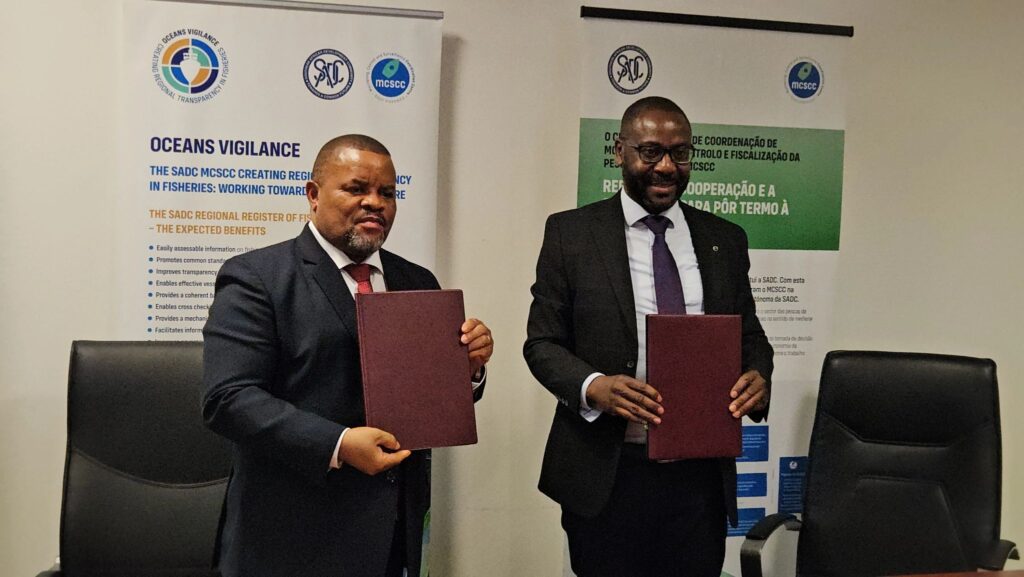
We are pleased to announce that the Host Agreement for the Southern African Development Community (SADC) Regional Fisheries Monitoring, Control and Surveillance Coordination Centre (MCSCC) was recently signed, providing an important step in establishing a new era for fisheries governance in Southern Africa. Dr. Stanley Ndara, Chairperson of the SADC MCSCC Board of Directors and H.E. Roberto Albino, Minister of Agriculture, Environment and Fisheries of the Government of Mozambique signed the Agreement on 24 October 2025, in Maputo, Mozambique . This is a key step for the SADC culminating over a decade of collaboration and coordination to fulfil the regional commitment to protect our fisheries for future generations.
Why is this Host Agreement so significant?
With the formalisation of the Host Agreement, the physical building that will become home to the MCSCC may now he handed over to the SADC and the MCSCC will be able to develop a permanent seat for the MCSCC institution. The first step in the building of the MCSCC was taken in April 2024, which saw the groundbreaking for the new MCSCC, since then building work has progressed and the Centre is soon expected to be ready for occupation.
In 2017, the SADC Charter Establishing the MCSCC, which provides the legal framework for the establishment and operation of this institution mandated to coordinate monitoring, control and surveillance (MCS) in the SADC region was signed by SADC Council of Ministers in Pretoria, South Africa. In 2023, two-thirds of the SADC Member States had signed the Charter for establishing the MCSCC, bringing the Centre into Force. The MCSCC is currently coordinating regional fisheries MCS data and information sharing services and supporting capacity building of national MCS systems, while development of a Regional Register of Fishing Vessel is underway as well as monitoring of fishing vessels, while plans are in the pipeline for coordination of fisheries observers and provision of fisheries law enforcement and legal support services.
Congratulations and thanks are due to all those that have helped to progress the journey of the MCSCC, including Member States, the MCSCC Board of Directors, the Government of Mozambique, the SADC Secretariat and our partners, WWF, SIF, GIZ, AU-IBAR, and all financial supporters who play an important role in supporting the MCSCC in its initial stage of operations.