Malawi takes initiative to end the use of monofilament nets – nationally and regionally
Salima, Malawi– October 27-31, 2025
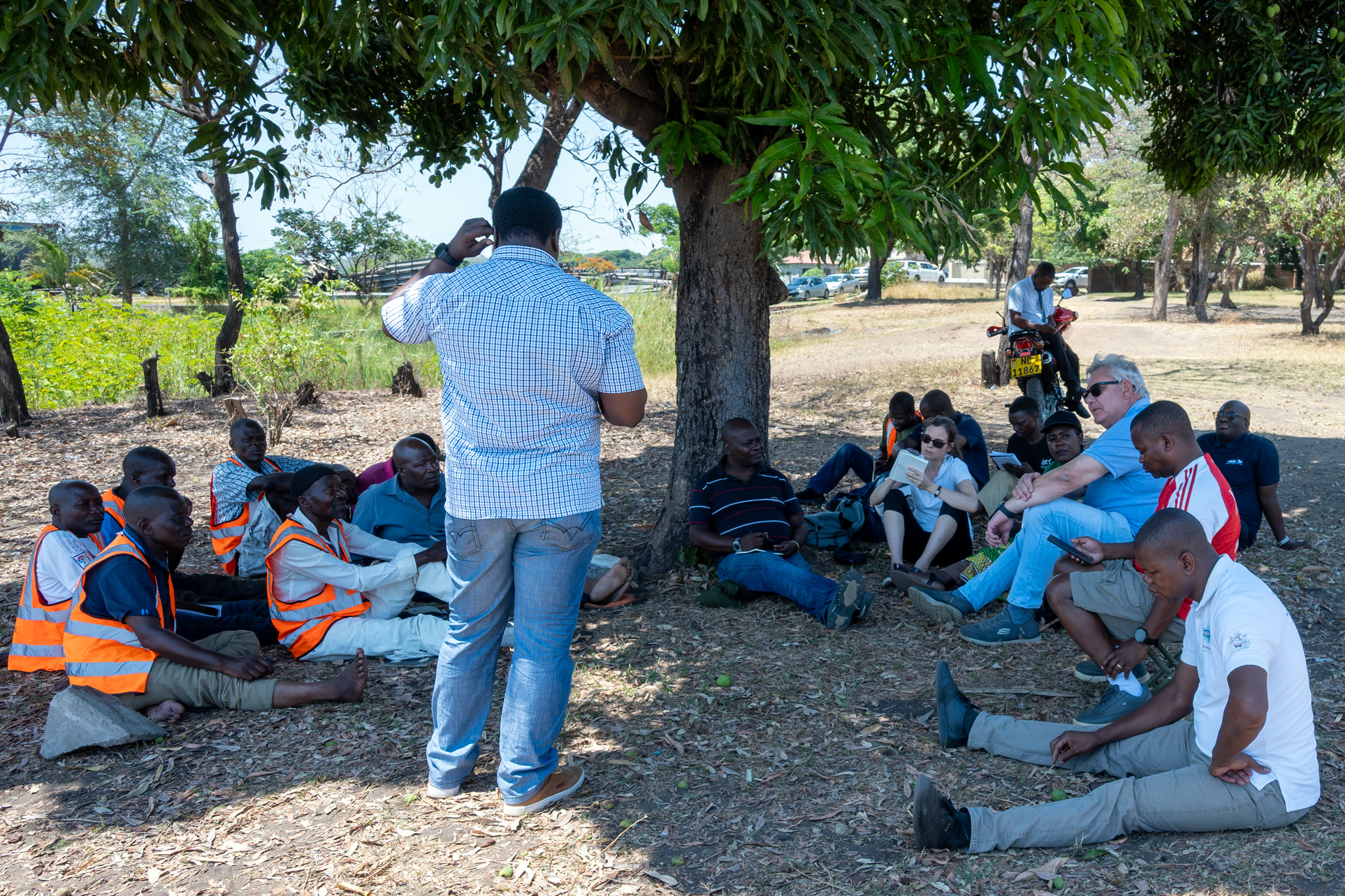
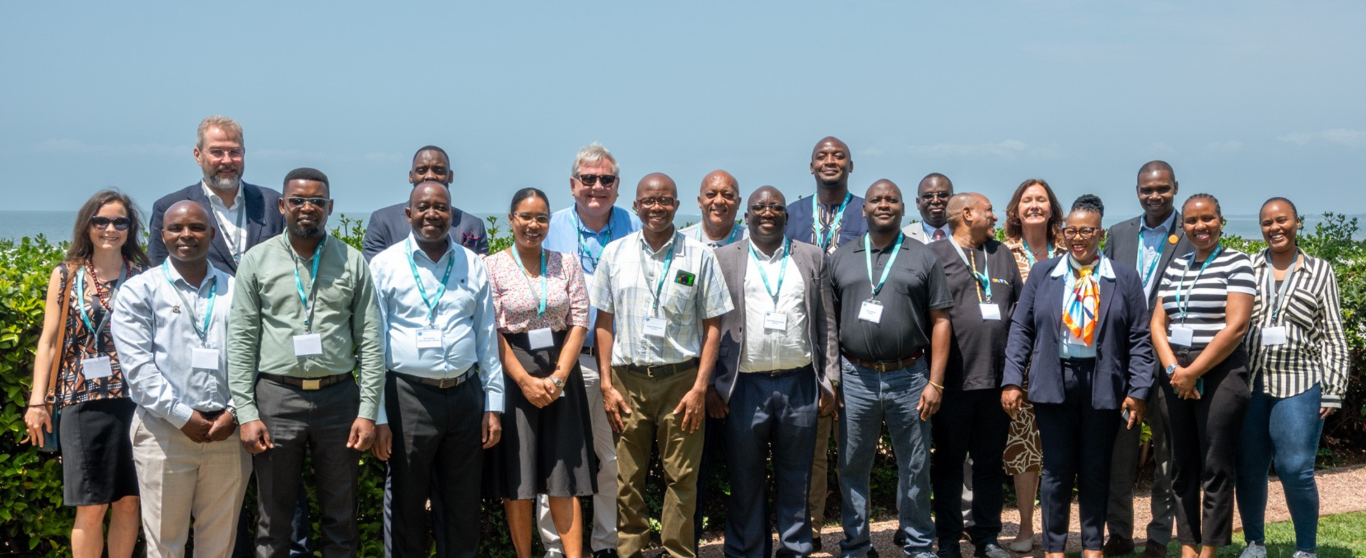
On 27-31 October 2025, in Senga Bay, Salima, Malawi mobilised stakeholders from districts around Lake Malawi to take further actions against the use of illegal monofilament nets in the lake. This included a two-day participatory workshop on 27-28 October, in Salima, which was organised with the purpose to document and share experiences from the different districts, compile best practices and identify measures to combat monofilament nets. 40 participants, representing relevant government and non-governmental stakeholders involved in addressing the issue of monofilament nets, travelled to Salima to exchange on this major challenge in Malawi, as well as in the Southern African Development Community (SADC) region. This consultative workshop helped compile important findings and recommendations, which will be used to strengthen existing efforts made by Malawi, and to catalyse regional action against illegal monofilament nets through the SADC Monitoring, Control and Surveillance Coordination Centre (MCSCC).
Monofilament and mosquito nets have been prohibited in Malawi since 2020 due to their destructive impact on fish stocks. Despite the ban and awareness campaigns, their use remains widespread in Lake Malawi, Lake Malombe, Lake Chilwa, and river systems such as the Shire River. Since they first appeared in the country in 2017, the trend has been increasing with 75,000 out of 88,000 units of gillnets being recorded as monofilament in 2024, or 85 percent. With 1 unit equivalent to 100m, this was as much as 7,800 km of monofilament nets in use in Malawi’s waters.
The challenge extends beyond Malawi. The use and distribution of monofilament nets is a regional problem in both marine and inland fisheries. Addressing it requires collective regional action, particularly to harmonise legislation, strengthen enforcement, and disrupt supply chains.
‘Over 7,800 km of monofilament nets deployed in Malawi’s waters’
“This is alarming, and we need to end this. We need to find a way forward, and to understand what we can do as a sector and as a country. We need to work with our neighbours and take actions. Malawi’s fisheries department is ready to take up this issue to SADC Ministers responsible for fisheries, to address this issue at the highest level”, said Dr. Hastings Zidana, Director of Fisheries.
In February 2025, a training for MCS in inland fisheries had been organised in Malawi’s capital Lilongwe, including representatives from Malawi, Mozambique, the United Republic of Tanzania, Zambia, Zimbabwe and Democratic Republic of Congo. This training showed that all countries share similar challenges with regards to illegal, unreported and unregulated (IUU) fishing, with the biggest issue being the use of monofilament nets. This had been reiterated by the third meeting of the SADC MCSCC Operational Task Force (OTF) in October 2025, which agreed on the need for the MCSCC to coordinate regional efforts to address this threat. For this, the OTF recommended to use Malawi’s experience to catalyse regional awareness and collective action. The goal of the OTF: positioning the issue for consideration by the OTF meeting, the SADC Technical Committee on Fisheries (TCF) and subsequently at the SADC Ministers’ meeting in 2026.
This workshop, led by Stop Illegal Fishing through a grant provided by the FishFORCE Academy of Nelson Mandela University, provided significant information to support this case. For each district, the participants shared their knowledge on monofilament nets, including the actors involved and the drivers behind their use. Based on their experience, they reflected on strategies. Malawi has engaged many initiatives to combat monofilament nets, including by setting up multi-agency Joint Monofilament Committees (JMCs) that have been confiscating nets. The local authorities and the Beach Village Committees (BVCs) established all along the Lake, too, play an important role locally to sensitise and confiscate illegal gears. Those solutions have yielded some results, but progress has been constrained by resource limitations, low fisher awareness, and the continued accessibility of those monofilament nets.
Deep dives in the supply chain were also conducted by all districts, to understand the routes of this illegal trade, and about the actors involved along the chain. Monofilament nets are not made in Malawi but smuggled across Malawi’s borders from neighbouring countries. The presence of representatives from trade and customs (Malawi Revenue Authority, MRA), was also important to raise awareness on the challenge, and to identify immediate solutions that could be implemented to enforce the 2020 import ban at the border.
Following the workshop, further consultations were conducted with BVC representatives and women fishmongers and processors, who play an important role to mitigate the arrival of fish from monofilament nets onto the market.
This national consultation highlighted that ending monofilament nets in Malawi will require cooperation: at regional level, and at national level, through multi-agency cooperation, notably with trade and customs and police, and inclusion of all relevant stakeholders from the value chain. The next step will be to consolidate those learnings into a regional action document to be discussed by the OTF at its next meeting early 2026.
“Malawi remains committed to end IUU fishing in the region”, said Dr. Maxon Ngochera, Head of Capture Fisheries Division, as he closed the workshop. “We have banned monofilament nets because they are very harmful for our country, ecologically, socially, and economically. We have made several efforts nationally, but we need to act as a region”.
For more updates, stay tuned on our website and social channels.
Follow us on our social media pages